
How Can I Relax When I Cannot Switch Off After Work or Scrolling?
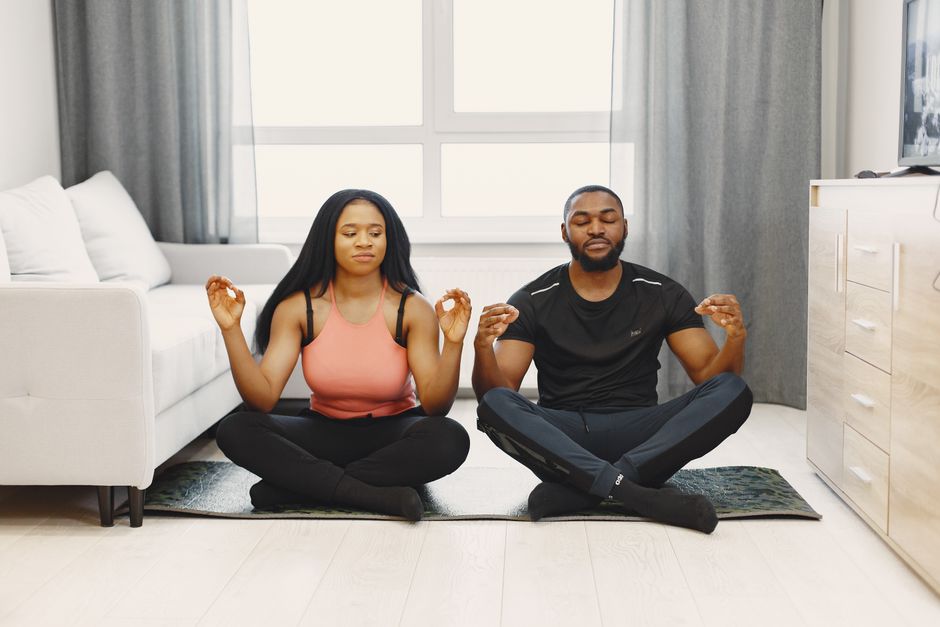
When your brain will not switch off, use a short transition that changes your input rather than demanding instant calm: put the phone out of reach, choose one sensory, movement, or structured-focus activity, and repeat it at the same point in your day. Test one practice for a week, keep the version that lowers your cognitive load, and seek professional support if distress feels unmanageable.
How can I relax when my brain will not stop thinking?
Start by giving your attention a job. Racing thoughts rarely respond to the instruction to “relax”; they respond better to a small, defined task that interrupts the loop without creating another performance test.
The American Psychological Association recommends counting backward by threes from 100 as a structured distraction exercise. That is the useful distinction: weak instruction, “Stop thinking.” Strong replacement, “Count backward by threes until the next transition.” The second option gives your mind a lane.
If the thoughts are paired with physical tension, use progressive muscle relaxation. NCCIH identifies progressive muscle relaxation, guided imagery, diaphragmatic breathing, self-hypnosis, and biofeedback-assisted relaxation as options used to bring about the relaxation response, which it describes as slower breathing, lower blood pressure, and a reduced heart rate. Pick one tool, not five. A cluttered routine creates the same decision fatigue you are trying to leave behind.
| What is happening | Use this replacement | Why it fits |
|---|---|---|
| Thoughts are looping | Count backward by threes | It gives attention a structured task. |
| Your body feels braced | Progressive muscle relaxation | It shifts attention to tensing and releasing muscle groups. |
| Internal focus feels uncomfortable | Notice surfaces, textures, and temperature | It moves attention outward through grounding. |
| You feel restless after sitting all day | Walk | NIH identifies walking as a practical mood and stress support. |
For people moving from a demanding workday into home life, name the handoff. Say: “Work is closed for tonight; the next task is a ten-minute reset.” The phrase is not magic. Its job is to stop your brain from treating rest as an unplanned gap where unfinished tasks get to hold a meeting.
Why do I feel more anxious when I finally sit down to rest?
You can feel more anxious at rest because quiet removes the competing inputs that were occupying your attention; it does not mean you are failing at relaxation. The practical response is to lower stimulation gradually, not to force stillness immediately.
NCCIH cautions that relaxation techniques are generally safe but can occasionally bring on increased anxiety, intrusive thoughts, or fear of losing control. That matters because “just breathe” is not a universal script. If breath counting makes you monitor anxiety more closely, switch the target of attention: feel the chair under you, identify a cool or warm surface, or work through a neutral counting exercise.
Use the one-rung transition: replace the most activating input with something only slightly quieter. After rapid phone content, try a warm bath, a few pages of reading, a guided image, or a walk rather than demanding total silence. NIH's Emotional Wellness Toolkit recommends regular relaxing activities, a consistent bedtime and wake time, less electronics before bed, and low-stimulation choices such as reading or a warm bath.
Sleep is part of this handoff, not a separate project. NIH states that adults need seven or more hours of sleep per night, while school-age children and teenagers have different sleep needs. The point is not to turn bedtime into a scorecard. It is to protect a repeatable runway between screen-heavy work or school demands and sleep.
What can I do instead of scrolling when I feel mentally overloaded?
Replace scrolling with an activity that gives you either sensation, movement, or a defined focus; an empty command to use your phone less leaves the old habit in charge. Make the alternative visible before you need it: shoes by the door, a book on the table, or a note with one grounding prompt.
The case for a replacement is stronger than a vague digital detox. In a 2025 randomized controlled trial, 111 healthy students who reduced smartphone screen time to two hours or less per day for three weeks showed improvements in depressive symptoms, stress, sleep quality, and well-being compared with controls. Screen time rose quickly after the intervention ended, nearing baseline at follow-up. The operational lesson: a restriction without a maintenance ritual is fragile.
A separate 2025 randomized controlled trial enrolled 467 participants who blocked mobile internet for two weeks while retaining calls, texts, and nonmobile internet access. The researchers reported that 91% improved on at least one outcome involving mental health, subjective well-being, or sustained attention. Participants also spent more time socializing in person, exercising, and being in nature. This does not establish that everyone needs a phone ban. It shows that removing one stream of input works better when time is reassigned to a concrete alternative.
Use a phone parking line: “The phone stays here while I do one other thing.” Then choose from a short menu. A walk changes location. Guided imagery changes the mental picture. Grounding changes the sensory target. Reading changes the pace. If you still need to handle practical work after hours, contain it to one defined task, such as reviewing how small medical practices can compare supply vendors, then return the phone to its parking place.
Run a one-practice test
Do not redesign your evenings all at once. Run a simple test: choose one transition practice, use it at the same daily cue for a week, and note whether it feels doable and whether it reduces the urge to keep scrolling. You are testing fit, not grading your ability to relax.
Keep the review blunt. Ask: “Did this lower my input?” “Did it create less friction than scrolling?” “Would I repeat it on a tired day?” If the answer is no, change the practice, not your verdict on yourself.
Persistent distress deserves more than another productivity system. NIH advises seeking help from a mental health professional when someone feels unable to cope, has suicidal thoughts, or uses drugs or alcohol to cope. In an immediate crisis or if there is danger of self-harm, contact local emergency services or a crisis service right away.
Frequently Asked Questions
Do breathing exercises work if they make me focus on anxiety more?
Not for everyone. NCCIH notes that relaxation techniques can occasionally increase anxiety, intrusive thoughts, or fear of losing control. Use a non-breath-centered option instead, such as noticing texture, temperature, surfaces, or a structured counting task from APA's stress guidance.
How can I build a wind-down routine that I will actually keep?
Make the routine smaller than your motivation problem: attach one low-stimulation activity to a reliable end-of-day cue. NIH recommends consistent sleep and wake times, limiting electronics before bed, and using options such as reading or a warm bath. Keep the same sequence long enough to learn whether it fits your real schedule.
What are quick ways to calm down without using my phone?
Use a physical or structured alternative: a short walk, progressive muscle relaxation, grounding through sensations, guided imagery, or counting backward by threes. The best choice is the one that replaces the next scroll with a clear action and does not make your internal focus feel worse.
Sources
- National Center for Complementary and Integrative Health: Relaxation Techniques
- National Institutes of Health: Emotional Wellness Toolkit
- Smartphone screen time reduction improves mental health: a randomized controlled trial
- Blocking mobile internet on smartphones improves sustained attention, mental health, and subjective well-being
- American Psychological Association: Manage Stress Tools
Disclaimer: This article is for general information only and is not medical advice. It is not a substitute for diagnosis or treatment by a qualified healthcare professional. Always speak to your doctor before acting on anything you read here.